
Types of Diesel Power Generators and Their Different Uses
Diesel power generators are among the most important energy solutions used today, whether as a backup power source or as a primary source of electricity in areas that experience frequent power outages or lack access to the public grid. These generators are known for their durability, reliability, and long operational life, making them the preferred choice for many industries.
In this article, we review the different types of diesel generators and their various applications to help you choose the most suitable generator for your needs.
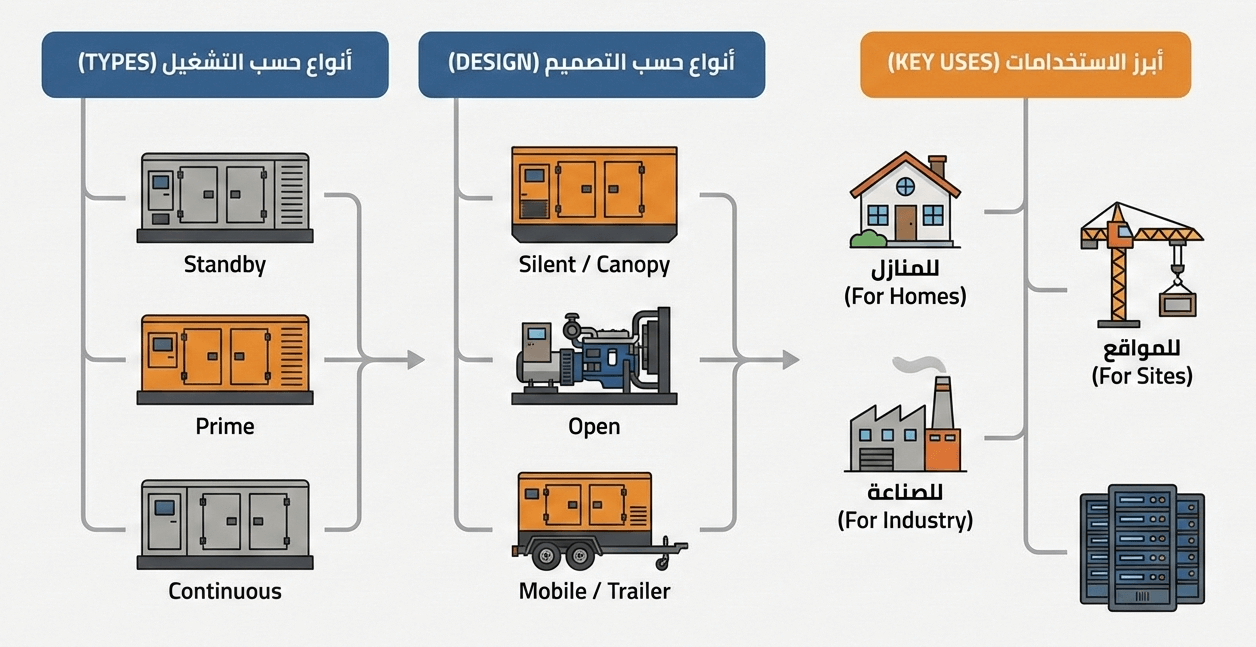
Diesel Generator Types Based on Operating Conditions
When looking for a diesel generator, the primary selection criterion is the required operating hours. Generators are divided into three main types:
1. Emergency Generators
This category is designed to act as a last resort in the event of a main power grid failure.
- Ideal Uses: Residential homes, administrative offices, and hospitals (as a backup system).
- Features: Typically comes with an automatic transfer switch (ATS) to automatically activate upon power outage.
- Note: Not intended for continuous operation for days on end, but only for emergency situations.
2. Main Power Generators
This type is the “winning horse” in the generator world, designed to operate for extended periods daily (8-12 hours) with varying loads.
- Ideal Uses: Construction sites, factories, and areas experiencing frequent power rationing.
- Features: High endurance and excellent cooling efficiency suitable for hot climates.
3. Continuous Run Generators
These are the most powerful and expensive category, designed to operate 24/7 without interruption and at 100% constant load.
- Optimal Uses: Power plants, data centers, and large-scale mining operations.
Generator Classification by Design and Structure
The design of the generator’s structure affects the noise level (decibels) and the optimal installation location.
1. Soundproof Generators
Soundproof generators are the most popular choice in residential and commercial areas.
- Design: The generator is housed in a metal canopy lined with soundproof and weatherproof materials.
- Advantages: Very low noise, protection from rain and dust, and high tamper resistance.
2. Open Generators
- Design: The engine and alternator are mounted on a metal base without any external cover.
- Advantages: Lower cost, easier maintenance, and access to mechanical parts.
- Disadvantages: Very loud noise; therefore, it is preferable to install them in soundproof rooms away from residential areas. 3. Portable Generators
These are generators (often soundproof) mounted on a wheeled trailer for easy towing and transport between sites. They are widely used in road projects and emergency situations.
Technical Specifications: Cooling and Power Capacity
To ensure you purchase or rent the best diesel generator, pay attention to these technical specifications:
Cooling System
Air Cooling: Suitable for small and medium-sized generators.
Water Cooling: Essential for large generators operating in hot regions (such as the Gulf and the Middle East) to prevent engine overheating.
Power Capacity
This is the most important classification when buying, as it determines the generator’s operating capacity.
Types of Diesel Generators by Power Capacity
1. Low-Capacity Generators (30–100 kW)
These generators are commonly used in:
- Retail shops
- Office buildings
- Small medical clinics
- Large residential properties
- Temporary job sites
Advantages:
- Fuel-efficient operation
- Easy transportation and installation
- Low operating costs
- Ideal as backup power generators
2. Medium-Capacity Generators (100–1000 kW)
Widely used in:
- Medium-sized factories
- Construction companies
- Hotels
- Hospitals
- Commercial centers
Advantages:
- Ability to power multiple loads simultaneously
- Suitable for long operating hours
- Stable voltage output
- Ideal for generator rental projects
3. High-Capacity Generators (Above 1000 kW)
Typically used in:
- Large industrial plants
- National infrastructure projects
- Temporary power stations
- Ports and airports
- Industrial zones
Advantages:
- Continuous 24/7 operation
- Ability to handle extremely heavy electrical loads
- High fuel efficiency relative to output
- Parallel operation capability (multiple generators working together)
Types of Diesel Generators by Brand
Generator quality and performance vary by manufacturer. Some of the most reliable brands include:
- Caterpillar Generators:
Ideal for heavy-duty industrial applications and large-scale projects, known for strength and durability. - Volvo Generators:
Renowned for fuel efficiency and consistent performance. - Komatsu Generators:
Designed for harsh working environments and construction sites. - Denyo Generators:
Japanese-made soundproof generators, perfect for urban use. - Airman Generators:
Energy-efficient, reliable, and easy to maintain.
How to Choose the Right Diesel Generator
When selecting a diesel generator, consider the following:
- Required power capacity (kW)
- Daily operating hours
- Usage type (backup or prime power)
- Noise level requirements
- Fuel consumption
- Availability of maintenance and spare parts
Making the right choice ensures stable operation and lower long-term costs.
Conclusion
Diesel power generators come in various types and capacities to suit all needs, from small applications to massive industrial projects. Choosing the right generator from a trusted provider ensures uninterrupted power and long-term reliability.
Need help choosing the right generator?
The Egy Truck team is ready to help you select or rent the ideal diesel generator for your project.
📞 Contact us today for a free consultation and a customized quote.
Similar Articles
Common Mistakes When Choosing A Power Generator For Factories
Common Mistakes When Choosing A Power Generator For FactoriesChoosing a power generator for factories is a decision that has a major impact on production, costs, and safety. Unfortunately, many factories make common mistakes that lead to frequent breakdowns,...