
Generator Capacity | How to Choose the Right Size for Your Project?
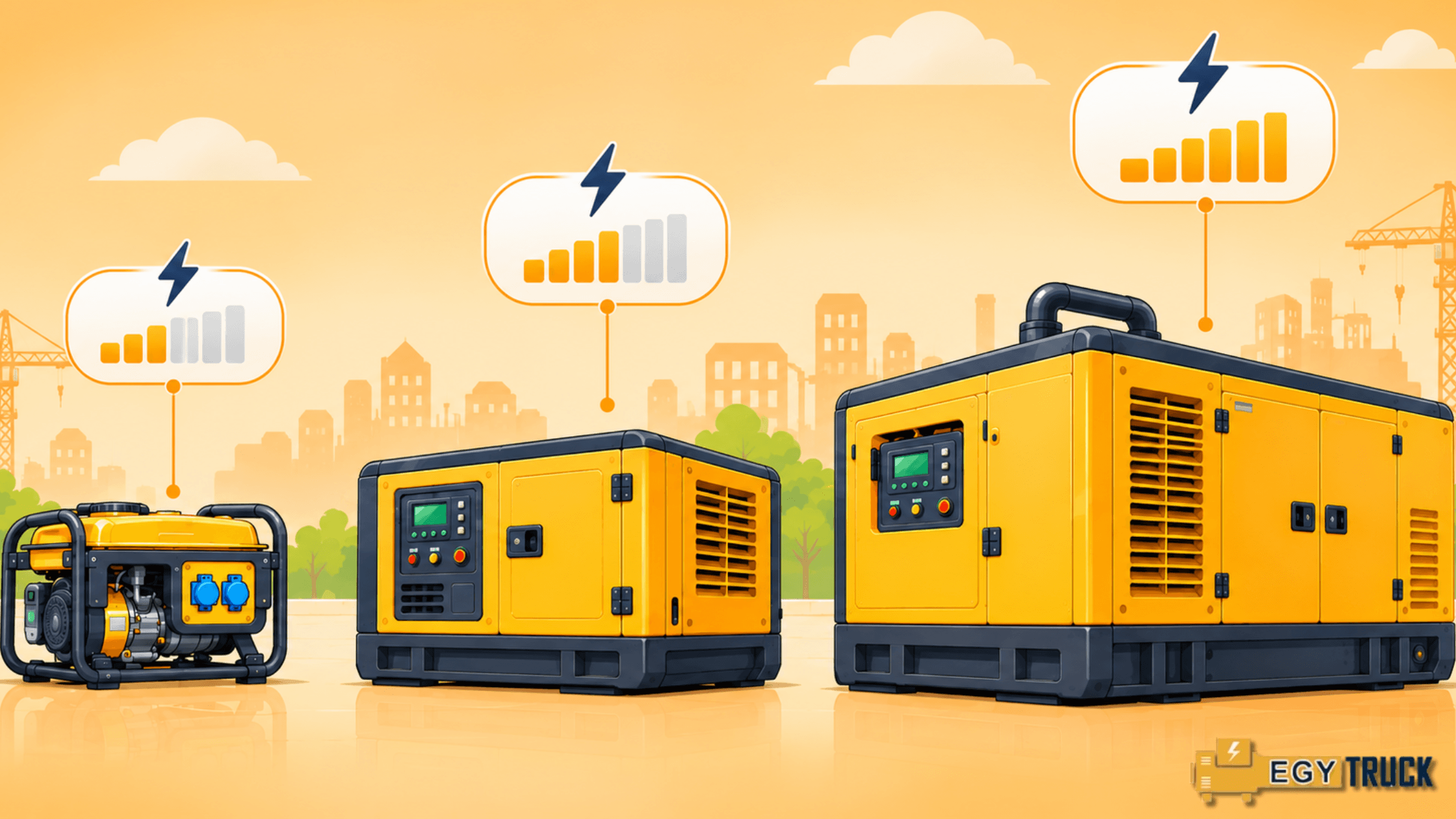
Choosing the right generator capacity is one of the most important factors to consider when purchasing or renting a power generator. Selecting a generator with insufficient capacity can lead to overloading and equipment shutdowns, while choosing a generator that is larger than necessary can increase operating costs and fuel consumption unnecessarily.
Power requirements vary from one project to another. Shops and offices generally require lower capacities compared to factories, hospitals, and large construction projects. Therefore, it is essential to calculate electrical loads and understand operating requirements before selecting the right generator.
What Is Generator Capacity?
Generator capacity refers to the amount of electrical power a generator can produce to operate connected equipment and appliances. Generator capacity is typically measured using two main units:
- Kilowatts (kW): Represents the actual electrical power available to operate equipment.
- Kilovolt-Amperes (kVA): Represents the generator’s apparent power and is commonly used to specify its rated capacity.
The relationship between these two units depends on the Power Factor, and can be calculated using the following formula:
kW = kVA × Power Factor
For example, a generator rated at 100 kVA with a power factor of 0.8 delivers 80 kW of actual power.
| Generator Capacity (kVA) | Actual Power (kW) at 0.8 Power Factor |
| 30 kVA | 24 kW |
| 50 kVA | 40 kW |
| 100 kVA | 80 kW |
| 250 kVA | 200 kW |
| 500 kVA | 400 kW |
| 1000 kVA | 800 kW |
Load Capacity per Generator Rating
To help you choose the right generator for your operational requirements, we provide a detailed file showing the load capacity for each generator rating. This document helps you determine the appropriate generator capacity to operate your equipment safely and efficiently.
How Do You Calculate the Right Generator Capacity for Your Project?
Determining the appropriate generator capacity depends on the total electrical load that needs to be powered, while considering the type of equipment and its operating requirements.
Start by listing all the appliances and equipment that will be connected to the generator, then record the electrical power rating of each item using its technical specification label.
For example, a factory may need to operate the following equipment:
| Equipment | Electrical Power |
| Lighting Systems | 6 kW |
| Industrial Equipment | 18 kW |
| Air Conditioning Units | 12 kW |
| Water Pumps | 8 kW |
| Total Load | 44 kW |
After calculating the total electrical load, several additional factors should be considered before determining the required generator capacity.
Starting Current: Certain equipment, particularly electric motors, pumps, and compressors, requires higher current during startup than during normal operation. Therefore, you must ensure that the generator can handle these starting loads without experiencing excessive voltage drops or operational issues.
Simultaneous Loads: Not all equipment necessarily operates at the same time. Identifying which machines and appliances run simultaneously helps determine the project’s actual electrical demand.
Power Factor: The actual power in kilowatts must be converted into apparent power in kilovolt-amperes when determining the generator’s required rating.
Future Expansion: It is advisable to consider potential future expansion when selecting a generator, helping you avoid the need to replace the unit when your electrical requirements increase.
Once the electrical loads, starting currents, and operating conditions have been assessed, the appropriate generator capacity can be determined through a professional technical load assessment.
Generator Capacities and Their Applications
Generators are available in different capacities to meet the power requirements of small, medium, and large-scale projects. They can be divided into the following categories:
Low-Capacity Generators (30–100 kW)
These generators are suitable for small and medium-sized applications that require a relatively limited primary or backup power supply.
Common applications include:
- Retail shops and offices.
- Workshops and small businesses.
- Small clinics and medical facilities.
- Agricultural applications and water pumps.
Explore our range of low-capacity generators from 30 to 100 kW.
Medium-Capacity Generators (100–1000 kW)
These generators are suitable for commercial and industrial facilities that need to operate multiple machines and handle higher electrical loads.
Common applications include:
- Factories and production lines.
- Hospitals and hotels.
- Construction companies.
- Warehouses and logistics centers.
- Construction and infrastructure sites.
Explore our range of medium-capacity generators from 100 to 1000 kW.
High-Capacity Generators (Above 1000 kW)
These generators are designed for large-scale projects and facilities with substantial electrical power requirements.
Common applications include:
- Large industrial complexes.
- Major national projects.
- Water and power stations.
- Oil and gas projects.
- Large-scale critical infrastructure facilities.
Explore our range of high-capacity generators above 1000 kW.
Other Factors to Consider When Choosing a Generator
In addition to electrical capacity, several other factors influence generator selection and operating performance.
Operating Classification: Determine whether you need a Standby generator for backup power during outages, a Prime generator for continuous operation with variable loads, or a Continuous generator designed for uninterrupted operation under constant loads.
Fuel Consumption: Check the generator’s fuel consumption at different load percentages, particularly if it will operate for extended periods. This helps you estimate operating costs and select a generator that meets your requirements efficiently.
Noise Levels: If the generator will operate near residential areas, hospitals, or hotels, you may need a soundproof generator to minimize operational noise.
Brand and Maintenance Availability: Choose a generator from a reputable manufacturer and ensure that spare parts, maintenance services, and technical support are available.
Operating Environment: Consider ambient temperature, ventilation, available installation space, and site requirements, as these factors can affect generator performance and available output capacity.
Generators in Various Capacities from Egy Truck
Egy Truck provides comprehensive solutions for the sale, rental, and maintenance of diesel power generators, offering a variety of capacities to meet the requirements of factories, construction projects, commercial facilities, and critical industries.
We offer generators from internationally recognized brands, including Caterpillar, Volvo, Komatsu, Airman, and Denyo, along with installation, commissioning, testing, maintenance, and technical support services.
Our services cover Cairo, Alexandria, Port Said, Ismailia, Suez, and Ain Sokhna.
Get Expert Advice on Choosing the Right Generator for Your Project
Choosing the appropriate generator capacity starts with understanding your actual power requirements and the equipment you need to operate. Whether you need a generator for a factory, commercial facility, or construction site, selecting the correct capacity and power rating helps prevent overloading and reduce operating costs.
Contact the Egy Truck team to discuss your project requirements and receive professional technical advice and a customized quotation, whether you are looking to purchase or rent a power generator.
Similar Articles
The Difference Between Prime, Standby, and Continuous Power in Electric Generators
The Difference Between Prime, Standby, and Continuous Power in Electric GeneratorsWhen searching for a diesel generator for sale or rent, you will find that manufacturers classify generator capacities according to their operating conditions and intended applications....
How to Choose the Right Generator Before Renting: A Complete Guide
How to Choose the Right Generator Before Renting: A Complete GuideChoosing the right generator before renting is essential to ensuring business continuity and avoiding unnecessary operating costs. Whether you need a generator to power a factory, provide electricity at...
How to Save Fuel Consumption for a Generator?
How to Save Fuel Consumption for a Generator?Fuel consumption is one of the most important operating costs when using diesel electric generators, especially in factories and projects that rely on generators for long periods. Therefore, improving operating efficiency...