
Difference Between Diesel and Gasoline Generators and Which Is Suitable For You
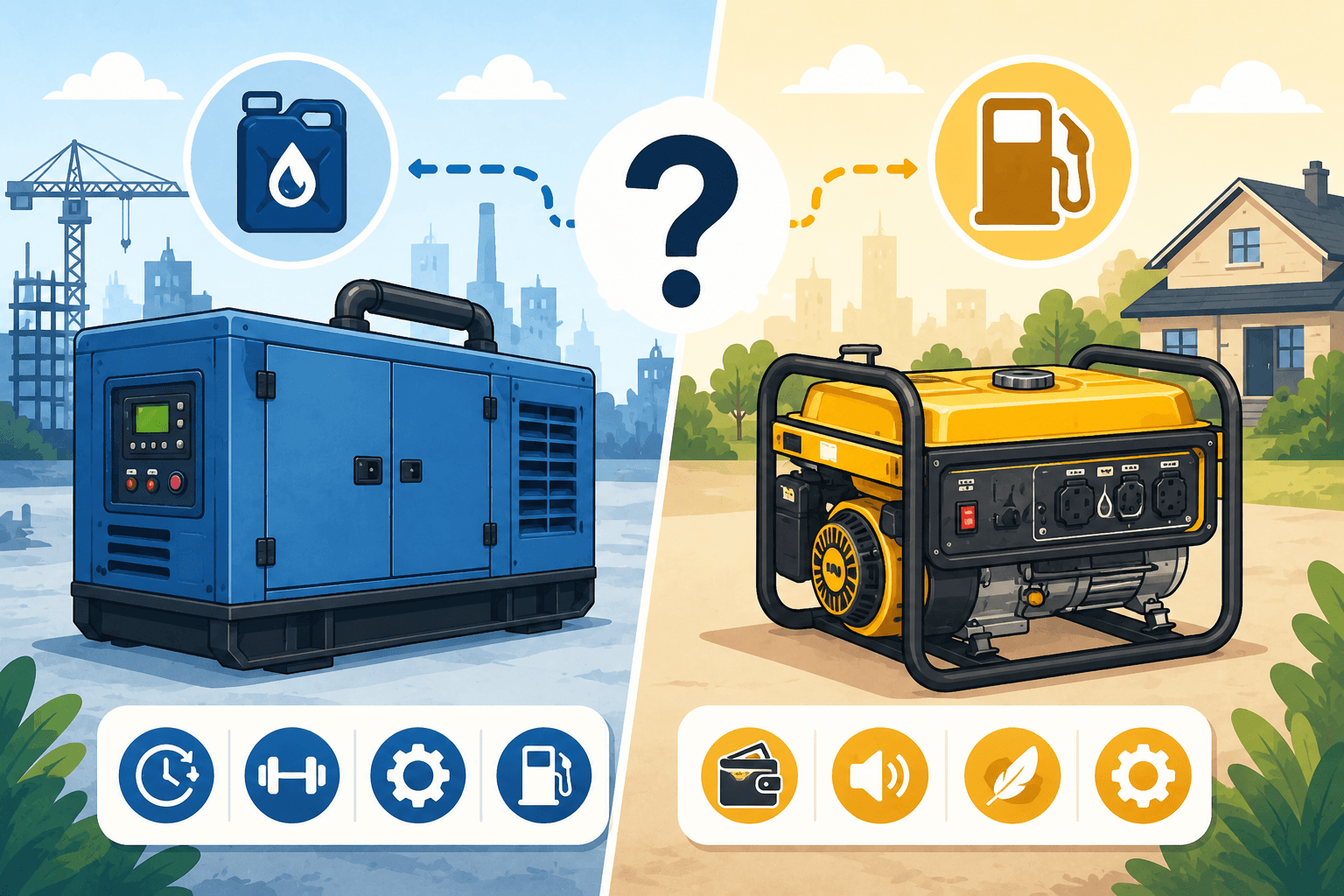
Electric generators are among the most important alternative power solutions during power outages or when an independent electricity source is needed. Among the most common types are diesel generators and gasoline generators, and each type has different advantages and applications.
Choosing the right type depends on several factors, such as operating duration, required capacity, fuel cost, and the nature of use. In this article, we will review the difference between diesel and gasoline generators to help you make the best decision.
Comparison Between Diesel and Gasoline Generators
| Comparison | Diesel Generators | Gasoline Generators |
| Fuel Type | Runs on diesel fuel | Runs on gasoline |
| Main Use | Long-term and industrial operation | Light and temporary use |
| Fuel Efficiency | Higher | Lower |
| Lifespan | Longer | Relatively shorter |
| Load Handling | Excellent for heavy loads | Suitable for small loads |
| Purchase Cost | Higher | Lower |
| Maintenance | Requires regular maintenance | Simpler maintenance |
| Noise Level | Usually higher | Relatively lower |
| Continuous Operation | Very suitable | Not preferred for long periods |
First: Diesel Generators
Diesel generators are the most commonly used option in factories, projects, and large sites due to their high ability to withstand continuous operation and heavy loads.
Advantages of Diesel Generators
1. Higher Fuel Efficiency
Diesel engines can produce more power using less fuel compared to gasoline engines, making them more economical, especially when operating for long hours.
2. Suitable for Continuous Operation
Diesel generators are characterized by their ability to operate for extended periods, making them suitable for:
- Factories
- Construction sites
- Hospitals
- Data centers
- Large-scale projects
3. Ability to Handle High Loads
They can operate equipment that requires high power, such as:
- Production lines
- Pumps
- Compressors
- Heavy machinery
4. Longer Lifespan
The design of diesel engines makes them more durable and capable of handling pressure and continuous operation, reducing the need for frequent replacement.
Disadvantages of Diesel Generators
1. Higher Purchase and Maintenance Costs
Diesel generators are usually more expensive than gasoline generators in terms of purchase price. Their maintenance also requires specialized technicians, and spare parts may cost more.
2. Noise and Vibrations
Diesel engines produce higher noise levels and more vibrations compared to some other generator types, which may make them unsuitable for residential areas or locations that require quiet operation.
3. Exhaust Emissions
Diesel generators produce exhaust gases such as:
- Nitrogen oxides (NOx)
- Particulate matter (black smoke)
- Other pollutants
Therefore, they require proper ventilation systems, especially when operating indoors.
4. Larger Size and Weight
Diesel engines are powerful but are usually larger and heavier than gasoline generators, making transportation and installation more difficult.
Second: Gasoline Generators
Gasoline generators are commonly used for small applications or temporary operations, providing a quick and low-cost power solution.
Advantages of Gasoline Generators
1. Lower Purchase Cost
A gasoline generator is usually cheaper than a diesel generator with the same capacity.
2. Smaller Size and Weight
They are easier in terms of:
- Transportation
- Storage
- Installation
Therefore, they are suitable for mobile applications.
3. Quieter Operation
Some gasoline generators produce less noise, making them suitable for homes or small locations.
Disadvantages of Gasoline Generators
1. Higher Fuel Consumption
When operating for long periods, fuel costs are higher compared to diesel generators.
2. Not Suitable for Continuous Operation
They are not recommended for running many hours daily because they are mainly designed for temporary use.
3. Shorter Engine Lifespan
With continuous operation and heavy loads, the engine lifespan may be shorter compared to diesel engines.
When Should You Choose a Diesel Generator?
Choose a diesel generator if you need:
- Daily or continuous operation
- Backup power for a factory
- Operation of heavy equipment
- High electrical capacity
- Reduced long-term operating costs
When Should You Choose a Gasoline Generator?
A gasoline generator may be suitable if you need:
- Temporary operation
- Small power capacity
- Home use
- Simple tasks or small sites
Difference Based on Usage
| Application | Best Choice |
| Factory and production line | Diesel |
| Hospital | Diesel |
| Construction site | Diesel |
| Home | Gasoline or diesel depending on requirements |
| Short-term use | Gasoline |
| 24-hour operation | Diesel |
Conclusion
There is no single best type for all situations; the right choice depends on the nature of the application.
If you need power, long operating hours, and the ability to handle large loads, diesel generators are the better option. However, if the use is simple and temporary, gasoline generators can be a more economical solution.
Need help choosing the right generator?
Egy Truck provides complete power solutions, including:
- Diesel generator rental
- Generators with different capacities
- Maintenance and technical support
- Power solutions for factories and projects.
Contact Egy Truck
The Egy Truck team is ready to help you select or rent the ideal diesel generator for your project.
📞 Contact us today for a free consultation and a customized quote.
Similar Articles
Common Mistakes When Choosing A Power Generator For Factories
Common Mistakes When Choosing A Power Generator For FactoriesChoosing a power generator for factories is a decision that has a major impact on production, costs, and safety. Unfortunately, many factories make common mistakes that lead to frequent breakdowns,...
Types of Diesel Power Generators and Their Different Uses
Types of Diesel Power Generators and Their Different UsesDiesel power generators are among the most important energy solutions used today, whether as a backup power source or as a primary source of electricity in areas that experience frequent power outages or lack...